
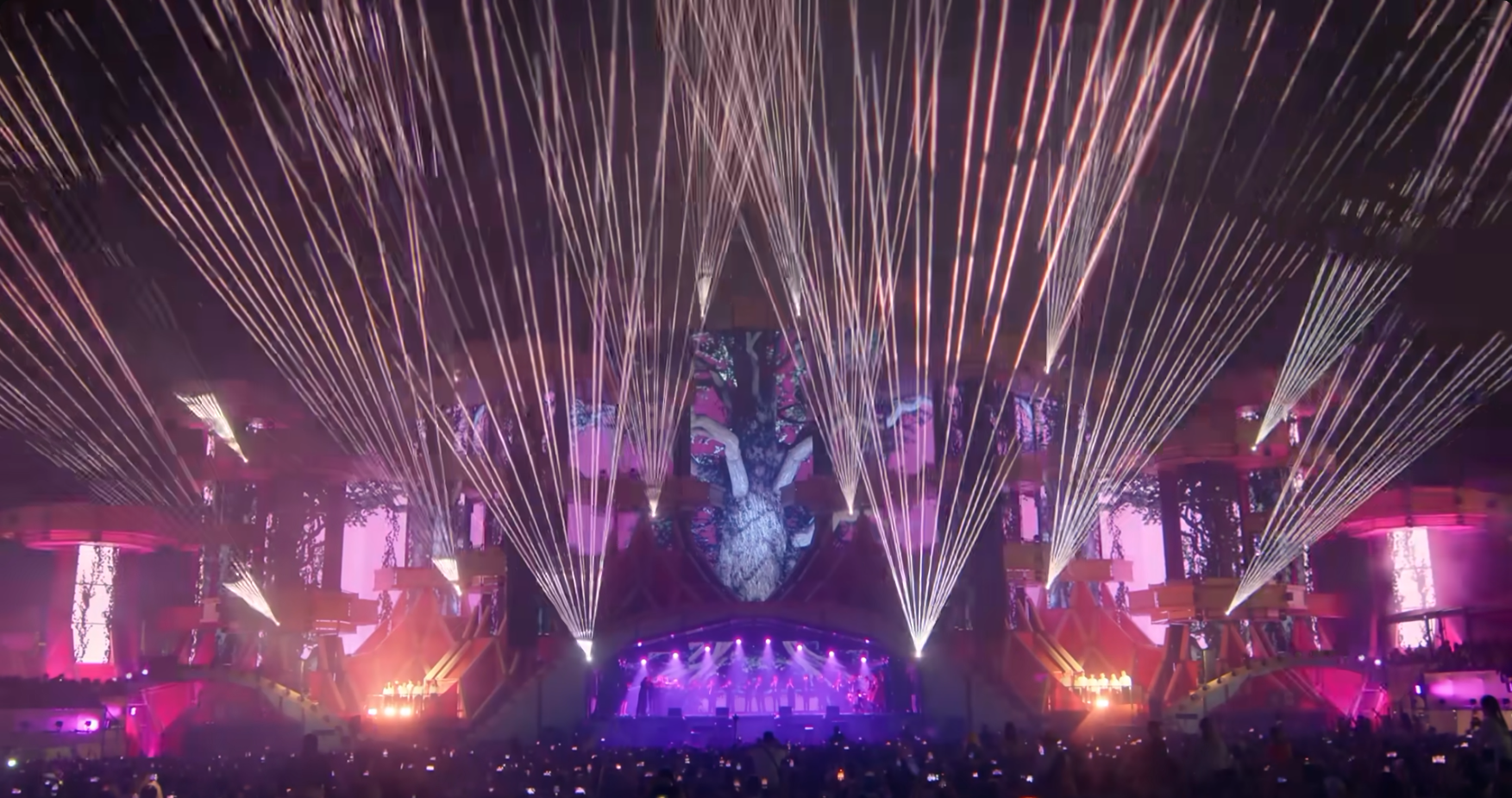
I was prompted to write this after seeing how much stage and concert lighting effects have moved on and what can be produced. For instance, this sequence from the 2024 Electric Love Festival.
Apart from a ‘wow’ moment, I realised it was an example of a very common aspect of my work as a learning technologist. That of showing to lecturers (or more often course teams) what is possible with the available technologies, to give inspiration of what their materials could look like or how they could be used.
In a concert, if you break down the various elements involved with the visual side of things such as ambient, moving and spot lighting, lasers, pyrotechnics, video backdrops, drone displays, etc. Each is a different technology, and in their own right produce something nice, but put together in a coordinated way and you have something quite memorable… It’s the same with learning technologies; there are different elements/tools, each of which has their ability to deliver, but put together, you have a very effective lesson or a full course.
Showing what is possible is part of a process I usually describe as “Top-down, bottom-up.”. With the lecturer bringing the material and any ideas they have (the bottom-up part). My role as a learning technologist is being the intermediary between the technology and the lecturer. Helping them translate what they want, materially and pedagogically, into an online version as well as helping them envisage how things might look using the technologies available to them, and the bit I love – taking it beyond their original expectations 🙂 There is also sometimes an opportunity within these discussions to demonstrate something totally new to them, and this leads them to think of something totally different. It would be nice to say what is different is always better as well, but that’s a trap. New technologies are worth exploring to see if they can deliver the teaching content in a better way, but it’s not always the case. Sometimes it does deliver in a better way, but there are other factors which prevent it from being a better solution.
Making things more interesting to learn online is a fun process. Sometimes, it’s a very simple thing, but it can help something work and/or look so much better. On other occasions, the enhancement involves quite a bit more work, but it all helps with the student engagement… If you think back to your school, college or university days, which lectures or lessons do you remember better? The ones that were engaging or the ones that were dry?
However, there is a flip side. There are limits to what can be done online, and usually limits in what the learning management system/content management system (LMS/CMS) can support or what the school/college/university supports. Just because a tool exists doesn’t mean it is available. Other factors which influence the choice of technologies are how accessible they are to disabilities and ‘sustainability’. Sustainability in this context, refers to developing online materials and resources that others can repair or also create. In a university, if something is created using bespoke coding, such as JavaScript, you are usually VERY reliant on the person who developed it to fix it – if it goes wrong. Because if they leave, or something happens to them. You’re stuck! So the idea is to develop materials which are easy to maintain or change – and that sometimes means you have to produce something that looks more pedestrian and mundane rather than materials that are ‘all singing and dancing’.
But with the rapid changes in technology, and the development of technologies like H5P, which help make interactive JavaScript materials accessible and easy to compose through a user interface, it does make you wonder what teaching online will look like in the future, particularly with the advent of AI and vibe coding (i.e. where you describe the app or online interactive element you want, such as a hot spot activity, to AI and request for it to produce the code. You’ll probably have to go through a few iterations and amendments, but I understand the results can be very good, if not excellent.