
[This is an updated repost of information I originally posted in 2020, much of it’s the same, but it needed updating regarding a few points.]
Are you thinking about, or looking for, a wedding photographer? Wondering what you need to know and should be looking for in one?
There are a lot of photographers, some specialise in just wedding photography, others are more generic, also covering events and/or portraits, etc. There are also many individuals with a camera and photography using a smartphone has advanced somewhat. So much media content is being captured by smart phone rather than a dedicated camera. So what’s the difference and where do you start?
Love their images
Probably the most important point. Photography is very much an art form, so the memories you get of your special day should not just be technically good, but artistic in a way you like. So it’s always worth having a look at photos that your photographer has taken and happy to present as part of their portfolio, even if they have never done a wedding before, you should be able to tell if you like the images they’ve taken so far.
Like the photographer
Do you like the photographer and get on with them as a person? Admittedly, on the day they are very likely to be so busy that you and your guests won’t have much opportunity to talk to them, but at the same time it’s useful to have somebody with whom you gel and find easy to get on with, as there is all the before and after work you should be doing with them.
but…! Beware of fakes
Unfortunately, you need to be aware of photographers who are stealing other photographers images and portraying these as images they’ve taken or using AI to generate fake portfolio images. There are no hard and fast rules about how you detect this, but a photographer who knows their work almost usually remembers (particularly portfolio work) and can talk you through albums, and be happy to discuss technical aspects and/or why they took that shot or framed it the way they did.
Quality
Thinking of just using a smartphone? Two differences between smartphone and traditional cameras are sensor size and the quality of the lenses. A large sensor has many more receptors or photosites than a smaller one. In short the greater number of pixels the better the image quality. That may not mean much, but it has implications for how you want to finally present an image. Computer screens typically present at 72 pixels per inch (ppi), printers like material to be 300ppi or greater. Smaller images can be enlarged, but the enlargement process is having to guess at filling in the missing pixels.
The lenses used also make a huge difference to the quality of photos. There’s a whole blog post or two I could write about it, but suffice to say there’s a reason professional photographers still pay £2000+ for a good lens.
Style
What type of photography do you want? Formal shots only? Reportage of the day? Coverage of the bride and groom getting ready? Coverage of the reception? First dance? etc. How long in effect do you want them to be there? Find out what the photographer can offer. If you want images of both the bride and groom getting ready, unless you happen to be in close proximity to each other on the day, a single photographer may find it difficult to be in two locations at once as well as deciding what you happy with the photographer taking image-wise. There’s often a lot of fun and frivolity around the preparations.
Second Camera
Find out if they will have a second camera or more with them (you can ask them to hire one as part of their fees). Even if they don’t use it, it’s kind of critical as added insurance to be able to continue to take photos and not be struck inoperative if they only have one camera and it fails on the day.
I always find it easier to have both cameras on me with different lenses, as it saves time changing lenses and missing shots, such as those lovely, unexpected, unrehearsed moments that occur or the different view points you get from using a wide-angle lens against a telephoto.
Wedding Rehearsal
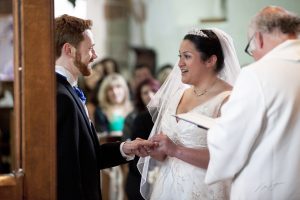
Will your photographer come to the wedding rehearsal and/or do a reconnoitre of the wedding and reception locations in advance? Or even if you want check out the local area for photo locations? It’s useful for the photographer to see what the working space is like and get an idea of the constraints. For example lighting and where they can position themselves during the service and day in general with the agreement of the minister or officiant. An example is a wedding I did in a very old church with a narrow aisle and pillars before the altar. This rather restricted the view of where the wedding couple were going to be standing and to take some of the shots required. I arranged with the vicar to change position to be in front of the couple at a convenient point, but without disturbing the ceremony. As it was, he didn’t actually see me move and wondered how I had got into position without him noticing 🙂
A photographer talking to the minister also has its advantages. There are often places the minister/vicar does not want anybody or certain people to go. Likewise, they also often know of good vantage points for catching moments and occasions during the ceremony.
To flash or not to flash?
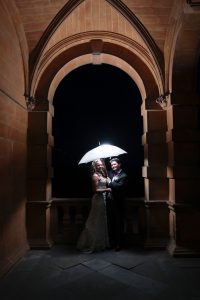
Will your photographer want to use flash (a strobe for the technically minded) during the ceremony? Are YOU happy for them to use flash? Flash produces its own problems apart from being intrusive, as everybody sees the flash going off, and it can seriously disrupt an atmosphere. For example, if you have a lovely, intimate candlelit experience going on, the last thing you really want is a bright camera flash constantly going off, disrupting it. I personally also don’t like using flash during the ceremony for that reason, and do my best to avoid using it unless, for technical reasons it’s unavoidable, but I would discuss this in advance. Flash also changes the light quality and how it falls. Used correctly it can be great at enhancing or even making a plain image stand out. Unfortunately, the opposite is also true, and a good photographer will be literally as well as figuratively thinking on their feet on how to best use and position the flash.
Editing Photos
Will the photographer be presenting you with edited images or just the straight out of camera (SOOC) files? A lot of a photographer’s time is in the editing of the images they are creating, and this can easily be 2-3 times or more than the actual day. The human eye and psychology of human vision is a curious thing, such that we see things quite differently from what the camera catches. So use of a photoeditor to do anything from simple crops (eg removing distracting artifacts) to full workovers to give an image a really nice feel. From my point of view, I don’t offer SOOC files. A SOOC image is often not what I felt I saw and I want to hand my clients what I saw, not what the camera also captured.
Farmed out?
Also to be aware of. Does the photographer do their own editing? Some farm out their images for others to edit. It gives the photographer more time to work on something else, but it also means that the image may not be edited as the photographer envisaged it.
Digital images, Wedding Albums, Wall Prints
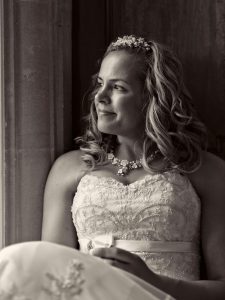
What are you wanting from the wedding apart from a record of the event and hopefully some great photos to share? Is the photographer offering just the digital images? Do you want an album? Many photographers have a one or two specialised wedding album companies they work with who don’t sell to the public and these albums are gorgeous – definitely family keepsakes. However, it’s not just the printing, it’s the composition of the images and please do ask if you can choose which images and approve the layout of what is going into the album. Likewise, this process can also be farmed out and the danger here is that different images get different priority.
Things going wrong/Insurance
Nobody wants things to go wrong and in most cases nothing does, but things can go wrong. What policies does your photographer have for such things? Does your photographer have professional insurance? It’s not something I’ve come across regularly, but some locations have asked for proof of insurance before allowing the photographer to take photos there.
Using family or a friend?
With the proliferation and availability of cameras and an increase, in general, in photography, there is every chance that there is a friend or a member of the family who you could approach to do the photography. Do keep in mind of what you want out of a photographer and remember that whoever does the photography is going to be focused on their job, so if it’s a family member or friend, they won’t really be sharing the day with you.